Invisible marking technology aims to make plastic recycling more efficient and competitive
Bologna-based deep-tech startup Sinbiosys has secured €2.36 million from the European Innovation Council (EIC) Transition programme to bring an innovative invisible marking technology for plastics and other materials closer to commercial application.
Invisible codes for smarter recycling and traceability
Sinbiosys is developing technology that can give products and materials an invisible digital identity, helping manufacturers and recyclers track, sort and authenticate materials more effectively.
The company’s ELISET project — short for Emission Lifetimes technology for sorting, Security and Traceability — has been selected for funding under EIC Transition, an EU programme designed to help promising research results move from the laboratory towards real-world applications and commercialisation.
For Sinbiosys, the funding marks another step in a research and technology transfer journey that began more than a decade ago at the University of Bologna and later led to the creation of the university spin-off.
Making plastic recycling more efficient
The technology could address one of the key challenges facing the plastics recycling industry: how to identify and separate materials accurately enough to produce higher-quality recycled plastics in a cost-effective way.
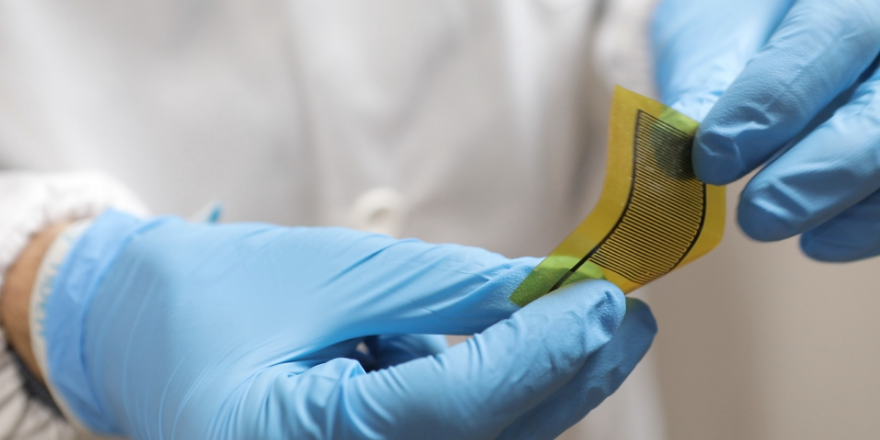
ELISET uses luminescent silicon nanocrystals, also known as silicon quantum dots, as invisible markers. The markers do not alter the appearance of the product and can be detected quickly and reliably using optical systems.
The technology also uses the decay time of the emitted light as a unique temporal signature, creating a robust coding system that can be used for material identification, traceability and anti-counterfeiting.
According to Paola Ceroni, Professor at the University of Bologna’s Giacomo Ciamician Department of Chemistry and co-founder of Sinbiosys, the technology comes at a critical moment for Europe’s recycling industry.
As the sector faces growing pressure to improve both the quantity and quality of recycled plastics while remaining economically competitive, more accurate identification of materials could help create purer waste streams, increase the value of recycled materials and improve the sustainability of recycling processes.
From academic research to industrial applications
The ELISET project also illustrates the path from academic research to commercial innovation.
By embedding traceability directly into materials, Sinbiosys aims to connect physical products with digital supply-chain systems, providing information that can support sorting, recycling, authentication and the management of material flows.
For Ceroni, the goal is to turn advanced research into practical tools that contribute to the green transition and circular economy, while making supply chains more transparent and helping protect products and materials.
The EIC Transition funding will support Sinbiosys as it moves this technology towards the market, with the potential to make material identification and traceability an integral part of more efficient and competitive recycling systems.